Wednesday, February 22, 2012
New Faculty Course Material page
At the top of our blog, you will see a new link that leads to a Faculty Course Material page. Here you can find course materials that our professors have made available to download. We will continually update this page as new materials are given to us.

Tuesday, January 31, 2012
How Much Do You Know About Shakespeare's Life?

1. Shakespeare's father John rose to the highest elective position in Stratford. What was his position?
2. When Anne Hathaway married Shakespeare, what was her physical condition?
3. Elizabethan theatergoers could purchase apples and pears to eat during the performances. What other function did these fruits serve?
4. What kind of scenery and set design was typical during Shakespeare's time?
5. In 1613, the Globe theater burned to the ground. What caused the fire?
6. Shakespeare revised his will the year he died. Who received the bulk of his real estate? Who received only his "second best bed" with the bedclothing?
7. Half of his plays would have been lost forever after he died but for one occurrence. What was this occurrence?
Answers:
1. Shakespeare's father John rose to the highest elective position in Stratford. What was his position?
Shakespeare's father, John, was a glover and leather-worker who rose through a series of positions of authority until, in 1568, he became high bailiff, the highest elective office in Stratford. In the 1570s, John Shakespeare was prosecuted (or threatened with prosecution) four times for the illegal activities of trading in wool and money-lending.
2. When Anne Hathaway married Shakespeare, what was her physical condition?
In November 1582, Shakespeare applied for a license to marry Anne Hathaway, whom he married on or about November 30. She was three months pregnant at the time.
3. Elizabethan theatergoers could purchase apples and pears to eat during the performances. What other function did these fruits serve?
These snacks were often thrown at the actors by dissatisfied members of the audience.
4. What kind of scenery was typically used onstage during plays?
In Shakespeare's time, theaters had no curtain and used little or no scenery. Playwrights described the setting within the text of the performance.
5. In 1613, the Globe theater burned to the ground. What caused the fire?
The Globe burned to the ground on June 29, 1613, set fire by a cannon shot during a performance of Shakespeare's Henry VIII.
6. He revised his will the year he died? Who received the bulk of his real estate? Who received his "second best bed" with the bedclothing?
In his will, he left most of his real estate to his daughter Susanna. A statement was inserted between the lines in the will, which said: "I gyve unto my wief my second best bed with the furniture." The "furniture" was the bedclothes for the bed. This is all he left his wife in his will, and the only time she was mentioned.
7. Half of his plays would have been lost forever after he died but for one occurence. What happened?
His dear friends John Hemings and Henry Condell published his plays seven years after his death. They said they had gathered his works "only to keep the memory of so worthy a friend, and fellow alive, as was our Shakespeare."
Had they not done this, according to Kate Pogue, half the plays Shakespeare wrote would have been lost forever.
Kate Pogue's class begins on Thursday mornings at 10:00-12:00 starting February 2, 2012.
Bracing for the "New" Middle East
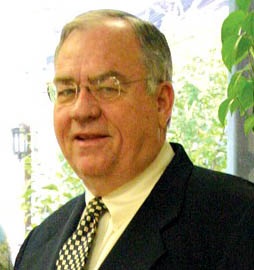
WIH Reporter: What is crucial for us to know about the new Middle East?
Hatchett: The events transpiring there must be viewed in the context of the culture and history of the peoples of that region, and not by American or European values. For example, we may see the process underway in Syria as a struggle between lovers of democracy and those trying to preserve authoritarianism, but the Syrian turmoil is heavily influenced by the centuries-old struggle between Sunni and Shia branches of Islam. In a broader sense, what we see as a democratic movement sweeping through the region is actually more of a trend to replace secular, western-friendly regimes with more traditional Islamic-based governments.
WIH Reporter: What effect does this have on Israel's position?
Hatchett: Israel is following the trends in the region with a sober eye. They see the rise of more fundamentalist, less western-friendly regimes as a threat to their security. This is why you don't see Israeli officials or media showering praise on the "Arab spring." Relations with Egypt will definitely change, despite the public assurances of the Egyptian military government that Egypt will honor its treaty obligations with Israel. Israeli military commanders openly talk about the need to beef up Israel's capability to fight a two-front war again.
WIH Reporter: What effect does this have on the Palestinian position?
Hatchett: The new regimes coming to power in the Arab world will most likely step up their support for "Palestinian rights." Even the so-called moderate Islamist government of Turkey (whose ruling Justice and Development Party has roots in the Muslim Brotherhood movement currently dominating the political scene in Egypt) has evoked this trend, threatening to send Turkish warships to escort aid ships to Palestinians in Gaza to prevent Israeli interception. This coincides with more vocal support for the "Palestinian cause" internationally, especially in Europe. The result is that Israel and the United States may become more and more isolated on the issue of Palestine and face not only political pressure, but perhaps military challenges as well in the near future. Palestine is the one issue that is capable of forging cooperation between Shia-dominated Iran and its Sunni Arab neighbors.
WIH Reporter: Is there hope for real change?
Hatchett: Despite the trends now underway, there is hope that real change is possible in this critical part of the world. As interaction between the world's peoples intensifies via globalization, the under-30 generation in the Middle East (which makes up nearly 50% of the population in many countries of the area) may embrace values more compatible with ours. So in the long run - two or three years from now - the type of democratic movement we hope for may begin to sweep the region. But in the near term, the big winners of the change now underway are those promoting a return to "traditionally Islamic values" and advocating less cooperation with the West, especially the United States.
WIH Reporter: What about the U.S. reaction?
Hatchett: How the U.S. reacts to the trends underway will be a critical factor in the stability of the region. We obviously encourage the spread of democracy and self-determination, even if in the near term this could cause problems for our foreign policy. But we are making clear that our country too has interests in this region that are vital: the security of Israel and uninterrupted access to the region's energy supplies. Leaders of both the Democratic Party and the Republican Party have made clear that if either of these vital interests is threatened, we will act, including using military force. We can only hope that the leaders of all factions in the Middle East take heed.
Ron Hatchett's class takes place on Wednesday afternoons from 1:00 p.m. to 3:00 p.m . starting February 1, 2012. For more information on this class, click here.
The Thrill of Shakespeare

WIH Reporter: What do we need to know about your latest Shakespeare class?
Pogue: Our ongoing class "Shakespeare's Great Speeches" turns to Shakespeare's history plays. At the risk of making our own election-year oratory sound pitiful in comparison, we are going to experience the most thrilling and inspiring examples of Shakespeare's rhetorical writing. We will follow King Henry V "once more into the breach" and glory with him as we band of brothers (and sisters!) go with him into the battle of St. Crispin's day. We'll sit on the ground with Richard II and "tell sad stories of the death of kings" and thrill with John of Gaunt to visions of "this blessed plot, this earth, this realm, this England."
WIH Reporter: What films will you be showing?
Pogue: Filmed performances of these speeches will feature Laurence Olivier, Kenneth Branagh, and Derek Jacobi. Before enjoying them, we will work our way through the speeches in class, discovering as we read aloud the enormous power of Shakespearean language.

WIH Reporter: It appears that the works of Shakespeare continue to exert a commentary on our own time.
Pogue: Shakespeare continues to be relevant to our world and time, and as an inspiration to other works of literature. Studying his works is a constant and rewarding adventure.
WIH Reporter: What have you discovered during your classes at the Women's Institute?
Pogue: The students at the Women's Institute are so intellectually curious, and so well-read that the discussion of related books is a constant subject, occurring before, during, and in-between classes.
WIH Reporter: What books are currently on your night table?
Pogue: At this time, on my bedside table are the following books: Roderick Graham's "The Life of Mary, Queen of Scots"; Eleanor Brown's "The Weird Sisters"; Bill Bryson's "A Short History of Nearly Everything"; Alice Kaplan's "French Lessons"; James Woods' "How Fiction Works", and "Misia" by Arthur Gold and Robert Fizdale.
WIH Reporter: What lies ahead for you?
Pogue: I am looking forward this Spring to finishing and finding a publisher for my newest book on Shakespeare titled, "Shakespeare's Education: How Shakespeare Learned to Write His Plays".
Kate Pogue's Shakespeare class, "Shakespeare's Great Speeches: The History Plays," starts on February 2, 2012, on Thursday morning at 10:00 a.m. to 12:00 p.m. For more information about this class, click here.
Election 2012: Richard Murray Weighs In

WIH Reporter: What are the unique factors in this election cycle?
Murray: Every presidential election cycle is different, and this one is certainly bearing this out. We are seeing unprecedented spending by Super Pacs - first for Romney, now Gingrich. This spending has clearly altered the race. We are seeing the continuing impact of the Tea Party movement, which did not exist until 2009. In addition, we are witnessing the enormously important role of television debates in the GOP contest. We are also seeing the continuing decline of traditional media, and the much greater role now being played by social media, such as Facebook.

Murray: The main known things that will drive the 2012 presidential election are the following two issues: Who will the Republicans nominate? What will be the state of the economy in the summer/fall of 2012?
The big unknowns are events that include unexpected foreign crises (Iran, Pakistan, etc.) or natural disasters – we have another hurricane season before we vote in November.
WIH Reporter: Every few weeks in the news we hear about turnarounds and changes, especially in the GOP contest.
Murray: Things change very quickly in multi-candidate primary contests because it is easy for voters to move from one horse to another. The reason for this is that they do not have to cross party lines. Don’t take anything to the bank in these contests until voters actually go to the polls. Look at the recent South Carolina results.
WIH Reporter: What are your thoughts about the growing polarization that we are seeing between the political parties in America?
Murray: Polarization is going to be with us for the foreseeable future, although many voters are turned off by it. However, these folks are not very important in party primaries, so they have little impact until you get to general elections.
All in all, it promises to be an exciting "horse race," and Murray's class is the place to be to get an ongoing, in-depth political analysis of this year's election.
For more information about Richard Murray's classes that start on February 6th and February 8th at 10:00 a.m. to 12:00 p.m., click here.
Monday, December 19, 2011
Are You Musically Informed?
Test your music trivia knowledge!
1. Who was the first major composer NOT financially dependent on a benefactor?
2. Who wrote over 100 symphonies, taught Beethoven, strongly influenced Mozart, and was known as 'Papa'?
 3. Who composed all his overtures the night before they were to be performed and who would be disgusted to know that one of his pieces became the theme song for The Lone Ranger?
4. Which French composer created a fun piece to play for his friends and then became so worried that it would damage his reputation as a composer that he suppressed the publication of all but one movement of it in his lifetime?
5. Which famous composer had 20 children?
Answers:
 1. Beethoven was the first truly successful composer. He sold a single piece to several different music companies at once and made money off of each one.

2. Joseph Haydn
3. Gioacchino Rossini. The night before one of his operas premiered, the impresario locked Rossini in a small room with two guards, who were ordered to throw him out the window if the overture was not finished by dawn.
 4. "Carnival of the Animals" is French composer Camille Saint-Saëns' most well-known piece. He composed it as private entertainment for his friends and did not allow it to be performed publicly while he was alive (except for an excerpt from "The Swan"). He did not want to be known for what he considered to be a frivolous piece.
5. Bach was married twice in his lifetime. Between his two wives, he sired a total of 20 children.
1. Who was the first major composer NOT financially dependent on a benefactor?
2. Who wrote over 100 symphonies, taught Beethoven, strongly influenced Mozart, and was known as 'Papa'?

4. Which French composer created a fun piece to play for his friends and then became so worried that it would damage his reputation as a composer that he suppressed the publication of all but one movement of it in his lifetime?
5. Which famous composer had 20 children?
Answers:
 1. Beethoven was the first truly successful composer. He sold a single piece to several different music companies at once and made money off of each one.
2. Joseph Haydn
3. Gioacchino Rossini. The night before one of his operas premiered, the impresario locked Rossini in a small room with two guards, who were ordered to throw him out the window if the overture was not finished by dawn.
 4. "Carnival of the Animals" is French composer Camille Saint-Saëns' most well-known piece. He composed it as private entertainment for his friends and did not allow it to be performed publicly while he was alive (except for an excerpt from "The Swan"). He did not want to be known for what he considered to be a frivolous piece.
5. Bach was married twice in his lifetime. Between his two wives, he sired a total of 20 children.
Writing for Healing and Transformation
"Your vision will become clear only when you look into your heart. Who looks outside, dreams. Who looks inside, awakens." - Carl Gustav Jung
Suzanne Adams teaches how writing can transform us and become a healing force in our lives. We checked in with Suzanne to learn more about her upcoming "Writing for Transformation" class.

WIH Reporter: What is important to know about your upcoming class?
Adams: This class encourages writing with authenticity and resisting self-censure (a great hurdle with all writing) so that our stories can emerge from the deep wells of the heart.
WIH Reporter: How does healing and transformation relate to the writing process?
Adams: When we write about events and experiences that have had a profound impact on us, we are diving into the waters of truth and exploring how we feel, at a deeper level, about those experiences. After learning how to incorporate the tools for writing a healing narrative, we emerge from those waters with a new perspective and wisdom to carry with us into the next chapter of our lives.
WIH Reporter: It sounds, in a way, like a kind of holistic medicine.
Adams: The interconnection between mind, body, and spirit is equally important. When we suppress or ignore a vital part of our stories, that withholding tends to manifest itself in another area, as physical ailments or by negatively affecting our peace of mind. Integrating and honoring our stories through transformative writing can improve health and restore harmony.
WIH Reporter: Tell us more about your background.
Adams: I write both fiction and nonfiction and was considering getting an MFA degree when I happened to read an article in Poets & Writers Magazine about a master's degree program that focused on writing for healing and transformation. After researching the program and reading several books on the subject, I felt I had found my calling. Words are inherently powerful - they can affect the quality of our lives and the state of our spirits. As a writer and reader, I had already witnessed the power of words to initiate transformation, so this next step into education and facilitation was an invitation I couldn't resist.
WIH Reporter: Can you give us a preview of your upcoming class?
Adams: We will be engaging in memoir-type writing, but this class will move further into exploring particular methods that help us gain insight from our narratives. And in the process, we'll discover how the power of transformative writing can enrich our lives.
ADDENDUM
According to the course description, "This workshop is open to anyone who wishes to discover new meaning in the experiences of the past, reconnect with his or her core sense of self, explore new avenues of growth, and preserve the value of memories. No writing experience is necessary." To find out more or to register for this class, click here.
Suzanne Adams teaches how writing can transform us and become a healing force in our lives. We checked in with Suzanne to learn more about her upcoming "Writing for Transformation" class.

WIH Reporter: What is important to know about your upcoming class?
Adams: This class encourages writing with authenticity and resisting self-censure (a great hurdle with all writing) so that our stories can emerge from the deep wells of the heart.
WIH Reporter: How does healing and transformation relate to the writing process?
Adams: When we write about events and experiences that have had a profound impact on us, we are diving into the waters of truth and exploring how we feel, at a deeper level, about those experiences. After learning how to incorporate the tools for writing a healing narrative, we emerge from those waters with a new perspective and wisdom to carry with us into the next chapter of our lives.
WIH Reporter: It sounds, in a way, like a kind of holistic medicine.
Adams: The interconnection between mind, body, and spirit is equally important. When we suppress or ignore a vital part of our stories, that withholding tends to manifest itself in another area, as physical ailments or by negatively affecting our peace of mind. Integrating and honoring our stories through transformative writing can improve health and restore harmony.
WIH Reporter: Tell us more about your background.
Adams: I write both fiction and nonfiction and was considering getting an MFA degree when I happened to read an article in Poets & Writers Magazine about a master's degree program that focused on writing for healing and transformation. After researching the program and reading several books on the subject, I felt I had found my calling. Words are inherently powerful - they can affect the quality of our lives and the state of our spirits. As a writer and reader, I had already witnessed the power of words to initiate transformation, so this next step into education and facilitation was an invitation I couldn't resist.
WIH Reporter: Can you give us a preview of your upcoming class?
Adams: We will be engaging in memoir-type writing, but this class will move further into exploring particular methods that help us gain insight from our narratives. And in the process, we'll discover how the power of transformative writing can enrich our lives.
ADDENDUM
According to the course description, "This workshop is open to anyone who wishes to discover new meaning in the experiences of the past, reconnect with his or her core sense of self, explore new avenues of growth, and preserve the value of memories. No writing experience is necessary." To find out more or to register for this class, click here.
Subscribe to:
Posts (Atom)